
Locate the nest and confirm wasps
We locate the exact nest, confirm wasp activity rather than honey bees or bumblebees, and work out how to reach it.

Practical pest control support for homes and businesses.
Wasp nest removal for homes, landlords and businesses in Wakefield and West Yorkshire, with clear access guidance and aftercare advice after treatment.
We treat wasp nests in lofts, wall cavities, soffits, sheds, hedges and the ground across Wakefield and West Yorkshire, for homes, landlords and businesses.
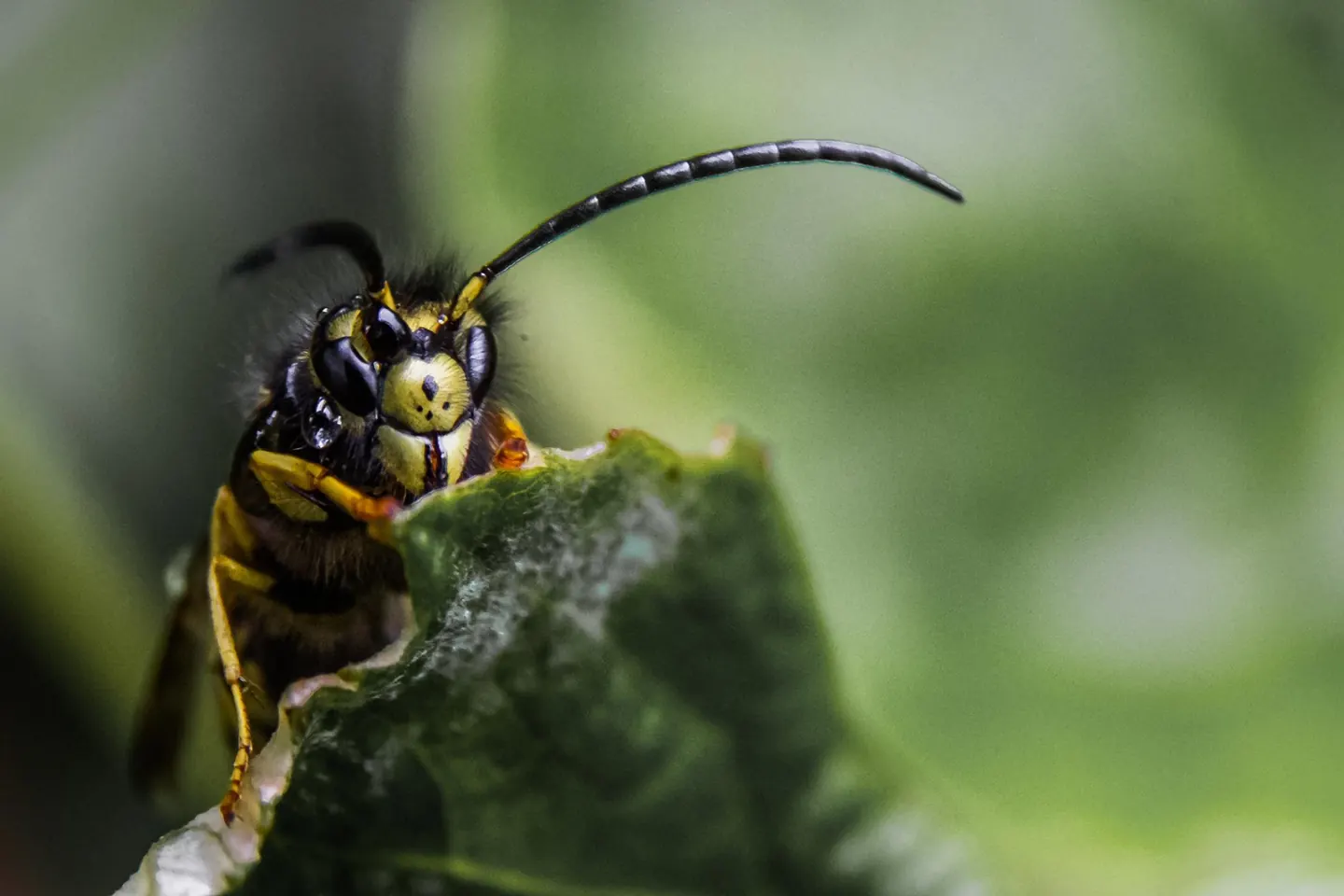
A wasp nest near a door or over a bedroom is a hazard for everyone nearby. A nest starts in spring as a golf-ball-sized paper ball built by one queen; by late summer it can hold thousands of workers, which turn to sweet food and drink from August. Disturbing a nest brings the colony out to defend it.
Common and German wasps nest wherever there is a dry void with a small entrance: a loft, a wall cavity reached through an air brick or soffit gap, under roof tiles, in sheds, bird boxes, hedges and holes in the ground. We locate the nest, confirm it is wasps and not bees, and treat it.
A queen's small spring nest can grow to a colony of thousands by late summer.
Wasps use soffit gaps, crumbling mortar, loose roof tiles and vent pipes to nest in cavities, so often only the entrance is visible.
Unlike bees, wasps sting repeatedly, and a disturbed nest releases an alarm scent that brings more workers out.
As the larvae stop being fed, workers switch to sweet foods and drinks, so stings around tables, bins and doorways peak.
Sealing the hole traps the colony in the cavity and they chew through plasterboard or find a route into the rooms.
Many wasps concentrated in one area of the garden, roofline or building.
A steady buzzing from a wall, ceiling, roof or soffit, loudest in warm weather.
A grey papery ball or dome in a loft, shed, cavity wall or bush, football-sized by late summer.
Wasps flying in and out of the same point, such as a gap under a roof tile or an air brick.
Stings near windows, doors or in the garden when nobody has provoked a wasp.
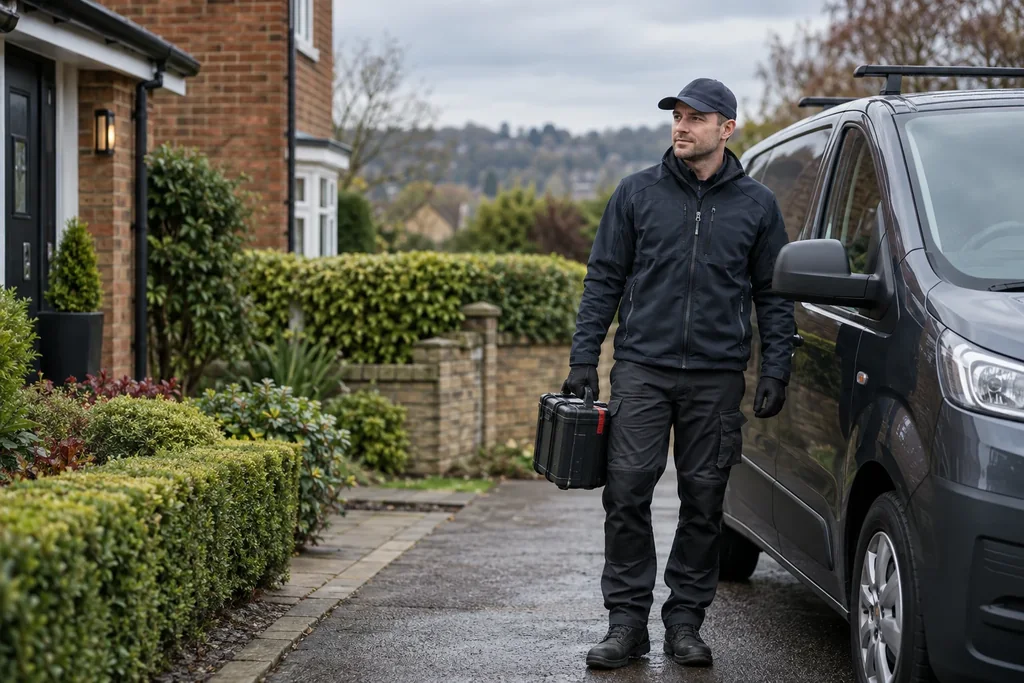
We locate the exact nest, confirm wasp activity rather than honey bees or bumblebees, and work out how to reach it.
We apply an insecticidal dust or spray into the nest or its entrance, so returning workers carry it in to the queen and colony. Activity drops over the following day.
Where possible we seal or advise on blocking re-entry points once the nest is dead, to avoid re-nesting in the same gap.
Returning wasps may be seen briefly around the treated area. Keep clear until activity stops.
Tell VermiCure what you have noticed and ask about the next step.
