Carpet Beetle Removal in Wakefield and West Yorkshire

Practical pest control support for homes and businesses.

Carpet Beetle Removal

Bare patches in the carpet or tiny larvae along the skirting? Carpet beetle treatment for homes across Wakefield and West Yorkshire. Call or WhatsApp 07951 157254.

We remove carpet beetles from homes and businesses across Wakefield and West Yorkshire, finding the source as well as treating the larvae in your carpets.

carpet beetle removal vermicure pest control
About Carpet Beetle Removal

Why carpet beetles need professional removal

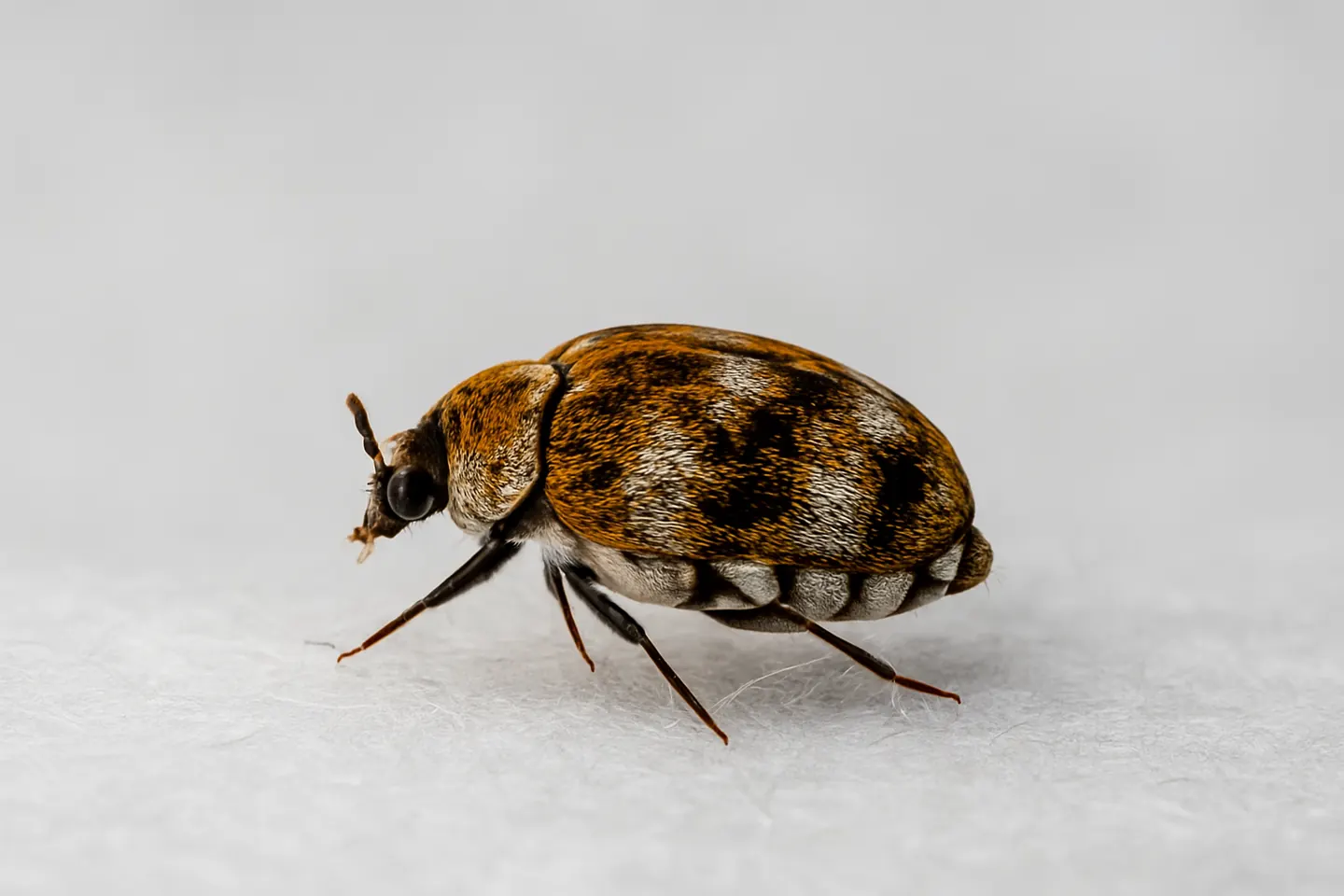
Carpet beetle larvae, the bristly brown grubs called woolly bears, eat wool, fur, feathers, leather and dead insects, cutting clean round holes in carpets, clothes and upholstery while nobody is looking. The adults are small round mottled beetles seen on windows and curtains in spring.

Most infestations start elsewhere: old bird nests in the loft, a dead bird in a chimney, dead flies in a window frame or a forgotten wool blanket feed the larvae first. Carpet beetle treatment that sprays the carpet without finding the source fails, so we trace it, remove it where we can and treat the rooms where larvae feed.

Damage shows before the insect does

Larvae feed under furniture and in stored textiles for months before holes and shed skins give them away.

The source is often out of sight

Bird nests under the eaves, dead insects in window frames and old rodent nests keep supplying your rooms.

A long larval stage

Larvae feed for most of a year before becoming beetles, so a problem builds slowly then seems sudden.

Adults fly in from outside

Adults feed on pollen and are drawn to light, so open spring windows let them in to lay eggs.

Easily confused with carpet moths

Both leave bald patches, but beetles leave shed skins rather than silk cases, and the treatment differs.

Signs of carpet beetles in your home

Clean round holes

Holes in wool carpets, rugs, jumpers and upholstery, often in one patch, without silk webbing.

Shed larval skins

Small hollow bristly skins, brown and banded, in carpet edges, drawers and around stored textiles.

Woolly bears

Short, plump, hairy brown larvae with a bristle tuft at the tail, on floors and in wardrobes.

Beetles on the windowsill

Small round mottled beetles on windowsills, curtains and light fittings in spring and summer.

Bald patches along edges

Threadbare strips at the edge of wool carpet, under heavy furniture and beneath rugs.

Debris from a nest or dead animal

Feathers, nest material, dead flies or a smell from a chimney breast or loft hatch.

What we do on a carpet beetle removal visit

Step 1

Find the source

We check the loft, eaves, chimney breasts and window frames for bird nests, dead insects and old wool, then inspect carpet edges and wardrobes in the affected rooms.

Step 2

Remove what is feeding them

Where we can reach an old nest, a dead bird or debris we remove it, or say when a builder or chimney sweep is needed.

Step 3

Treat the affected rooms

We apply a residual insecticide to carpets, edges, under skirting and furniture, wardrobe floors and the loft around the source.

Step 4

Advise and follow up

We explain when to vacuum, how to treat clothes and bedding, which vents to screen, and whether a second treatment is likely once eggs hatch.

Before we arrive

  • Vacuum carpets, edges, under furniture and inside wardrobes in the affected rooms, then empty the vacuum outside.
  • Hot wash or dry clean wool, feather and fur items from those rooms, or bag them for us.
  • Pull light furniture off the walls and lift rugs so the carpet beneath is open.
  • Clear access to the loft hatch, the chimney breast and window frames where you have seen beetles.

Keeping carpet beetles from coming back

  • Clear old bird nests from the loft and eaves once unused, and fit mesh or cowls so birds cannot return.
  • Clear dead flies and other insects from window frames, lofts and light fittings; they feed carpet beetle larvae.
  • Vacuum carpet edges and under heavy furniture regularly, and vacuum both sides of wool rugs.
  • Store wool, fur and feather items clean in sealed bags or boxes, and check them every few months.
  • Check windowsills and curtains in spring; a few adult beetles indoors is the moment to look for larvae.

What affects the price

  • Where the source is and how hard it is to reach.
  • How many rooms and how much stored material larvae have reached.
  • How much furniture must be moved and whether rooms are prepared beforehand.
  • Whether a follow-up treatment is likely after the first visit.

Common questions about carpet beetle removal

What causes carpet beetle damage?
The larvae feed on natural fibres and organic debris, so damage is often found around carpets, fabrics, wardrobes, loft spaces, and undisturbed edges.
Does cleaning matter before treatment?
Yes. Vacuuming, laundering, and reducing harbourage are often important parts of controlling carpet beetle activity.
What do carpet beetle larvae look like?
Short, plump, brown and bristly, a few millimetres long, banded, with a tuft of longer hairs at the tail, hence woolly bears. Their shed skins look like the larvae and are often found first.
Are carpet beetles harmful to people?
They do not bite or spread disease. Larval hairs and shed skins can cause itching and a rash in some people, especially from infested bedding, which stops once the larvae have gone.
Do I have carpet beetles or carpet moths?
Carpet beetles leave shed bristly skins and clean holes; carpet moths leave small silk cases and gritty debris. Adult beetles are round and mottled and sit on windowsills; carpet moths are slim and dull and run along skirting.
Why have carpet beetles appeared when I have no wool carpet?
Because the larvae eat more than carpet: dead insects in a window frame, a bird nest in the eaves, feathers in a duvet, a wool rug or pet hair under a sofa all feed them.

Need help with carpet beetle removal?

Tell VermiCure what you have noticed and ask about the next step.