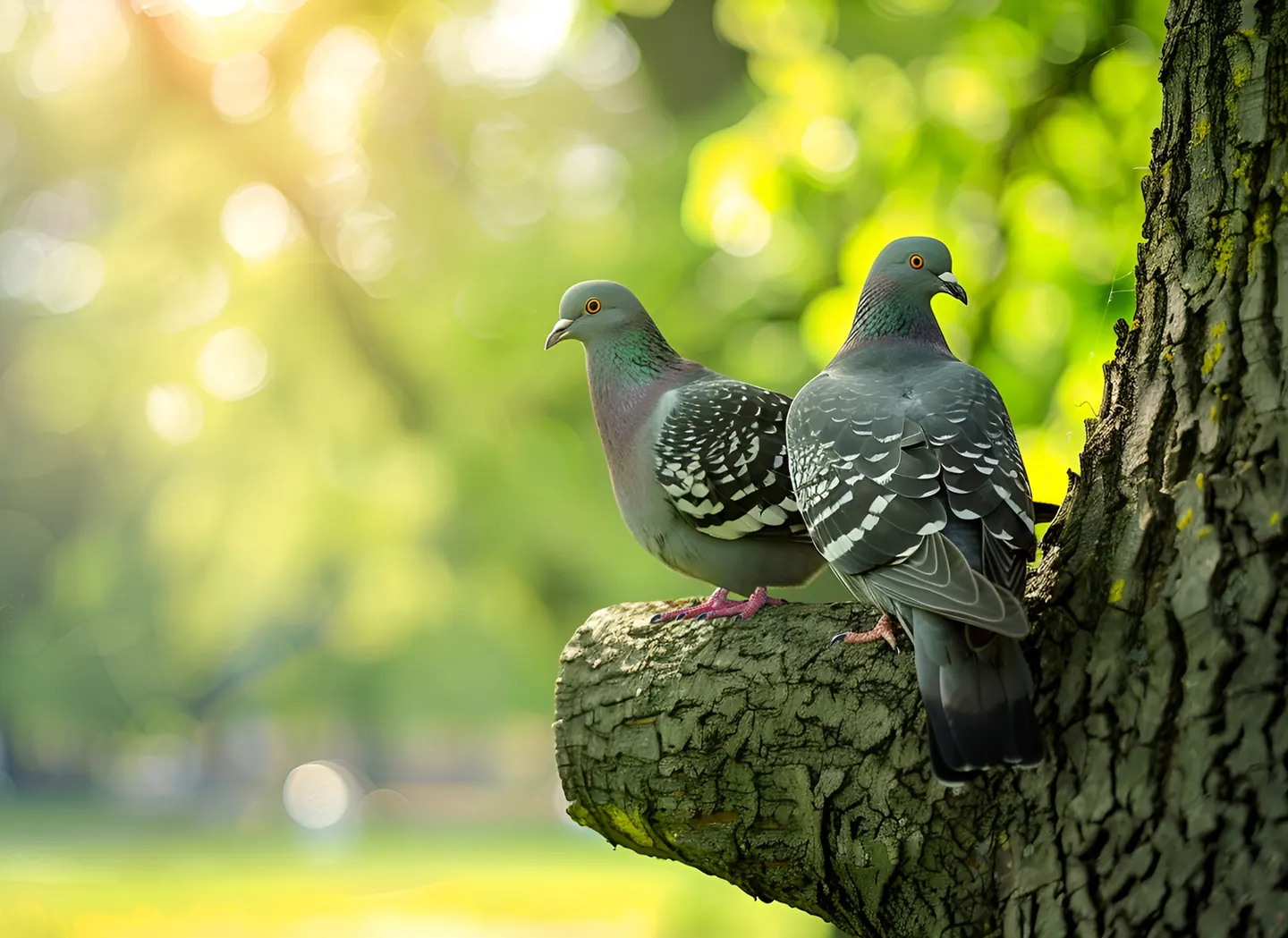
Pigeon Control in Wakefield and West Yorkshire

Practical pest control support for homes and businesses.

Pigeon Control

Pigeon control for homes and businesses in Wakefield and West Yorkshire, managing fouling, roosting and nesting pressure with practical deterrents.

We deal with feral pigeons roosting and nesting on homes, shops, offices and industrial units across Wakefield and West Yorkshire.

Bird control support from VermiCure
About Pigeon Control

Why pigeons take over a building and what we do about it

Pigeon problems start with a few birds on a ledge, in a gutter or under a solar panel, and grow. Feral pigeons return to the same spot every day, droppings build up on sills, paths and parked cars, and once a pair has nested the flock treats your building as home.

We survey where the birds land, roost and nest, then agree a pigeon proofing plan: spikes on ledges, netting across larger openings, mesh around solar panels, and clearance of nests and droppings once the law allows. Pigeons are wild birds, so everything we do stays within the Wildlife and Countryside Act 1981 and the general licences that apply to feral pigeons.

We work for householders, landlords, managing agents, shops, food businesses, warehouses and schools, whether it is one window sill or a whole roofline.

They breed for most of the year

Feral pigeons do not keep to a short nesting season. In towns they rear brood after brood from early spring into autumn, two eggs at a time, so numbers climb unless the site is proofed.

They are loyal to a roost

Once pigeons have fed, rested and nested somewhere they return daily and defend it. Noise or a plastic owl scares them for a few days at most; they learn, and come back.

Droppings damage the building

Pigeon droppings are acidic. On stone, render, paintwork, leadwork and car bodywork they etch and stain, and a build-up in guttering holds water against the roofline and causes damp.

Fouling is a health and slip risk

Fresh droppings make steps, fire escapes and loading bays slippery. Dried droppings break down into dust that can carry organisms linked to disease, so we damp down and wear protective kit before any clearance.

Nests bring other pests

Old nests and droppings shelter bird mites, flies, carpet beetles and clothes moths, which move into the rooms beneath, and nesting material blocks gutters, downpipes and soffit vents.

Signs pigeons have settled on your building

Droppings in the same places

Heavy fouling on window sills, paths, steps, air conditioning units or parked cars, refreshed every day.

Nesting material

Twigs, feathers and debris in gutters, behind signage, in vents and in the gap under solar panels.

Noise overhead

Cooing, scrabbling and flapping in the loft, roof void or behind fascia boards, often first thing in the morning.

A sharp ammonia smell

Strong and sour near roosts and nest sites, especially in warm or enclosed spaces.

Birds at dusk

Pigeons gathering on the same ledge or roofline at the end of the day are roosting there, not passing through.

What we do on a pigeon control visit

Step 1

Survey

We look at where the birds land, roost and nest, how they get in, how many there are and how heavy the pressure is, and we check for active nests, which set what the law allows and when.

Step 2

Plan the proofing

We match the pigeon deterrent to the pressure: spikes or post and wire for ledges birds perch on, netting for openings they nest in, mesh around solar panels, and sealing of gaps into the roof.

Step 3

Clear and clean

Where nests are out of use, or a general licence applies, we remove nesting material and droppings, bag the waste and treat the surfaces with a biocide before anything is fitted.

Step 4

Fit and hand over

We fit the spikes, netting or mesh, show you what has been done, point out anything we recommend for later, and tell you what to look for in the first few weeks.

Before we arrive

  • Stop any feeding on or near the property, by residents, staff or the public; food is what holds a flock to a site.
  • Tell us about access: parking, locked yards, flat or fragile roofs, skylights, and whether we can reach the area from inside.
  • Let us know about solar panels, satellite dishes and aerials on the roof, who installed them and whether they are under warranty.
  • If the birds are in a loft, clear a path to the hatch and move stored items away from the area under the nest.

Keeping pigeons off once the work is done

  • Keep food out of reach: bins closed, spilt bird seed swept up, no feeding of pigeons in the yard or garden.
  • Clear gutters each autumn and check that downpipes still run freely once the leaves have fallen.
  • Have slipped slates, broken soffits and loose fascia boards repaired promptly; a gap of a few centimetres is enough for a pigeon.
  • Check netting and spikes after storms and high winds, and call us if anything has lifted, sagged or been pulled away.
  • If you add solar panels later, ask the installer about mesh around the edge of the array at the same time.

What affects the price

  • Height and access: ground-floor sills and a flat roof reached from inside cost less than a parapet that needs a tower or platform.
  • The length of ledge, the size of the opening, whether solar panels need mesh, and whether spikes, wire or netting is the right product for the pressure.
  • How much nesting material and fouling has to be cleared, bagged and sanitised before anything is fitted.
  • The number of visits, for example where active nests mean part of the work has to wait.

Common questions about pigeon control

Why are pigeon problems a concern?
Pigeons can create fouling, blocked gutters, odour, slip risks, damaged surfaces, and reputation concerns for commercial premises.
What pigeon control options are available?
Options depend on the site and may include proofing, deterrents, cleaning advice, and practical changes to reduce roosting pressure.
Is it legal to remove pigeons and their nests?
Feral pigeons are wild birds, so they, their nests and their eggs are protected under the Wildlife and Countryside Act 1981. Proofing and deterrents are the lawful route and the one we use. Nests out of use can be cleared; nests in use are left alone unless a general licence applies, which we check on the survey.
Do you clear up the pigeon droppings as well?
Yes. Clearing nests and fouling is part of most pigeon control jobs, because the mess attracts mites, flies and beetles that move indoors, and because proofing should go onto clean surfaces. We damp the area down, bag the waste and treat the surfaces with a biocide first.
What do you do about pigeons nesting under solar panels?
Once the nest is out of use or a licence allows, we clear the nesting material and droppings from beneath the panels, clean the roof and fit a mesh skirt around the edge of the array so the gap underneath is closed. The mesh clips to the panel frame rather than screwing into the roof.
Will spikes or netting hurt the birds?
No. Spikes have blunt tips and stop a pigeon settling on the ledge; netting, fitted and tensioned properly, keeps birds out of a space rather than catching them. The birds move on to another site, so we also talk to you about food sources and neighbouring buildings.

Need help with pigeon control?

Tell VermiCure what you have noticed and ask about the next step.