Rat Control in Wakefield and West Yorkshire

Practical pest control support for homes and businesses.

Rat Control

Rat control for homes and businesses in Wakefield and West Yorkshire, with inspection, treatment, monitoring and proofing advice to reduce repeat activity.

We deal with rats in homes, gardens, lofts and business premises across Wakefield and West Yorkshire, from the first signs to proofing the building afterwards.

Rat control inspection support from VermiCure
About Rat Control

Why rat control takes more than a trap

One rat is rarely the whole story. Brown rats live in groups, use the same runs every night and travel unseen through drains, wall cavities and the gaps under sheds. By the time you hear scratching or find droppings, they are established.

At VermiCure we start with the building, not the bait: where the rats live, how they get in and what feeds them. We treat with tamper-resistant bait stations or traps, then show you the gaps to seal, for householders, landlords and businesses that need the activity dealt with and written up.

They breed all year

A female brown rat has several litters a year of six or more young, and those young breed within months.

They fit through small gaps

An adult rat gets through around 15 to 20mm, a thumb's width: broken air bricks, gaps around pipes, damaged drains and worn door bottoms.

Drains are the usual route

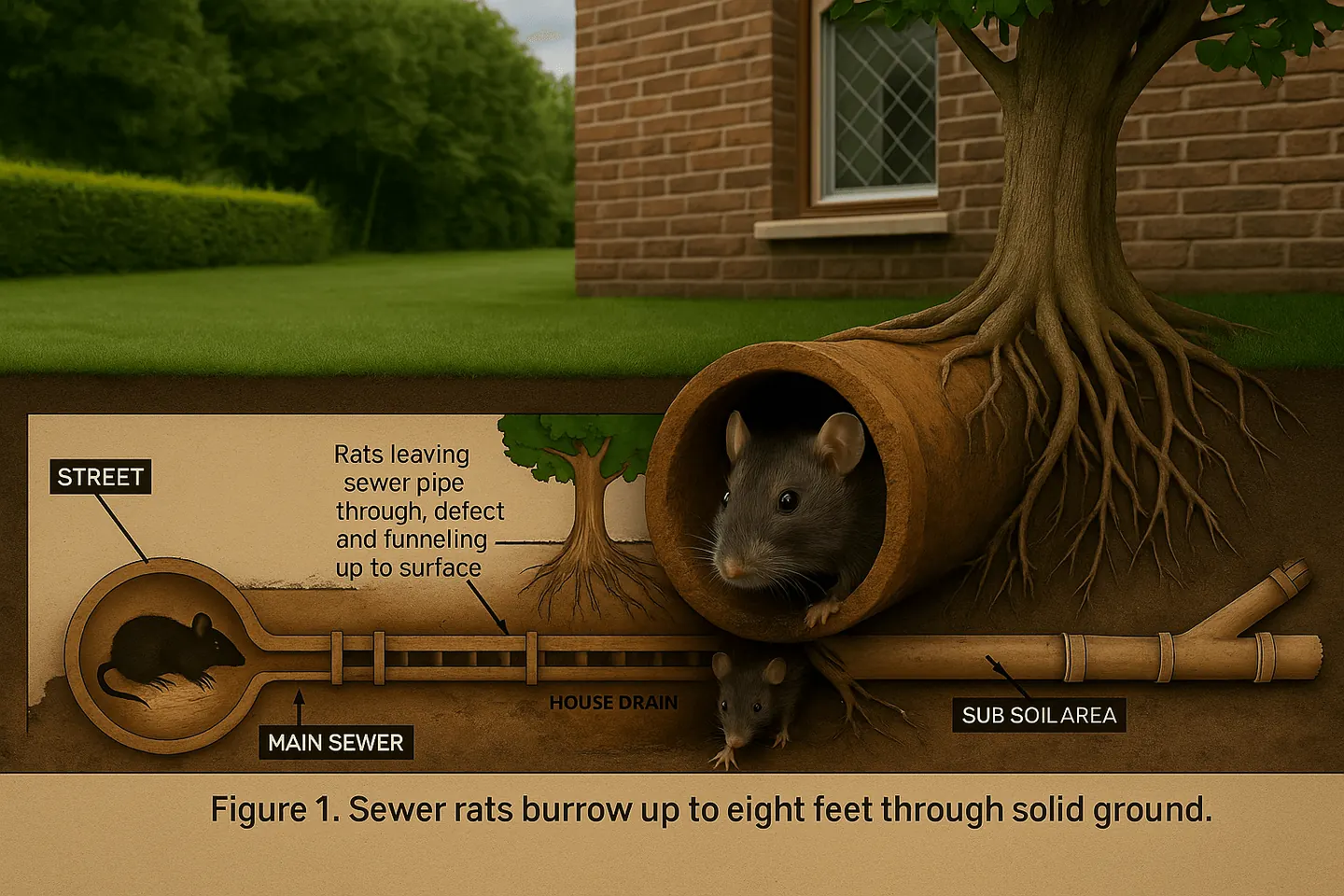
Brown rats live in the sewer system. A cracked pipe, an open redundant drain or a broken inspection chamber leads straight under the floor.

They are wary of anything new

Rats avoid unfamiliar objects for days, so bait in the wrong place is walked round. Placement on the runs they use is what works.

They carry disease and gnaw

Urine and droppings can spread leptospirosis, known as Weil's disease, and salmonella. Rats also chew cables, pipework and insulation; chewed wiring is a fire risk.

Signs of a rat infestation

Droppings

Dark, spindle shaped, 10 to 14mm long, in groups along walls and in cupboards.

Scratching and scurrying

In the loft, under floorboards or inside walls, mostly at night.

Gnaw marks

On food packaging, skirting boards, door bottoms, cables and plastic pipework.

Burrows and runs

Fist-sized holes in lawns, under sheds and decking, with worn paths between them.

Smear marks and smell

Greasy marks along skirting and pipes, and an ammonia smell from urine.

Illustration of rats moving from a damaged sewer pipe into a garden

What we do on a rat control visit

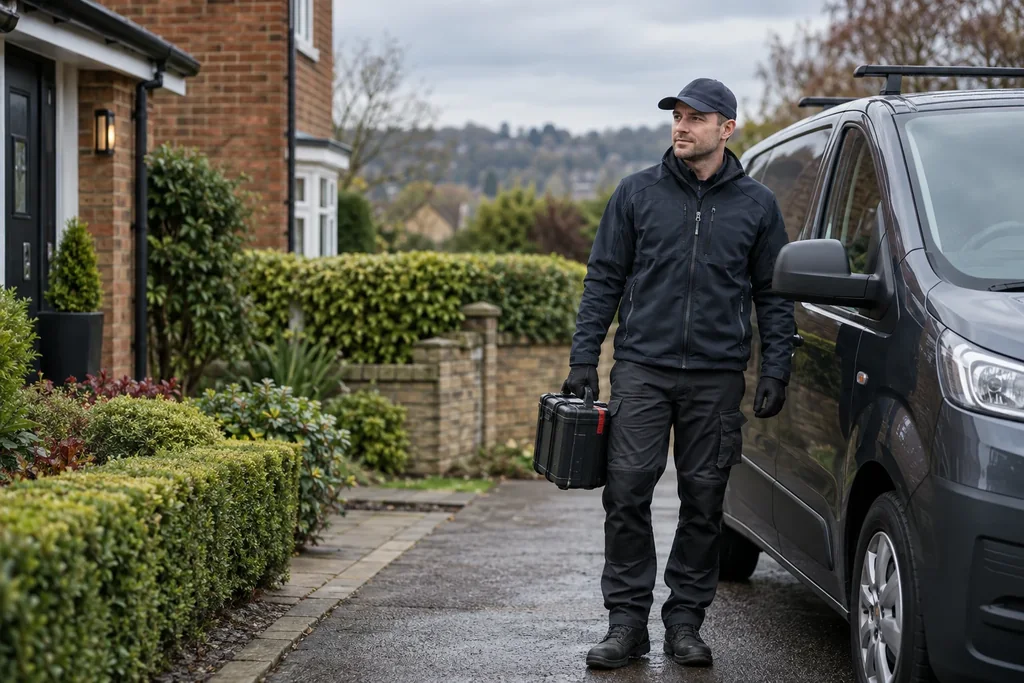
Pest control technician preparing equipment outside a residential property
Step 1

Inspect

We check inside and out, including the loft, kitchen plinths, outbuildings, drains and the garden, to find the runs, harbourage, entry points and food sources.

Illustration of a drain camera survey finding a rat in a pipe
Step 2

Treat

We place rodenticide in locked, tamper-resistant bait stations or set traps on the runs the rats use, record every position and explain what to expect.

The same garden bin area after the rat has gone
Step 3

Proof

We point out the gaps rats are using and, where you want us to, seal them with steel mesh, mortar and proofing strips.

Step 4

Follow up

We return to check the stations, remove dead rats and spent bait, and collect the bait once the activity has stopped, leaving you proofing and hygiene advice.

Before we arrive

  • Note where and when you have seen rats, droppings or heard noises; it helps us find the runs.
  • Clear access to the loft hatch, under-stair cupboards, kitchen plinths and any outbuildings.
  • Leave droppings where they are until we have seen them, and tell us about any bait or traps already down.
  • Put food, pet food and bird seed in sealed containers and clear fallen fruit from the garden.

Keeping rats out afterwards

  • Fit mesh to damaged air bricks and seal gaps around pipes with mortar or steel wool; foam alone is chewed through.
  • Have defective drains repaired and redundant pipes capped; a drain camera survey finds the faults you cannot see.
  • Keep bins closed, clear spilt bird seed daily and store food and animal feed in rodent-proof containers.
  • Cut vegetation back from walls, lift stored timber off the ground and fit brush strips to outbuilding doors.

What affects the price

  • The size of the property and the number of outbuildings and garden areas to check.
  • How established the activity is, which sets the number of bait stations, traps and follow-up visits.
  • Whether rats are coming from the drains, which may need a camera survey or a rat flap.
  • The proofing you want carried out, and for businesses the paperwork you need for audits.

Common questions about rat control

What are common signs of rats?
Droppings, scratching noises, gnaw marks, burrows, damaged packaging, smell, and sightings around gardens, kitchens, lofts, or outbuildings can all indicate rat activity.
Do rat problems need proofing advice?
Yes. Treatment is stronger when likely entry points, food sources, harbourage, and repeat-risk factors are identified.
Do I need rat removal, a rat exterminator or rat control?
The same job done properly. We treat the rats that are there, find how they got in and advise on keeping the next ones out; treating without closing the route is how problems return.
Why do I have rats in the loft?
Rats climb cavity walls, climbing plants and pipe runs and get in through soffit gaps. A loft is warm, quiet and full of nesting material, so we trace the route up as well as treating it.
Should I put poison down myself first?
We would rather you did not. Loose bait is a risk to pets, children and wildlife, rats often avoid it, and a poisoned rat dying under a floor smells for weeks.
How do I know the rats have gone?
Fresh droppings stop appearing, bait stops being taken, the noises stop and tracking dust stays undisturbed. We check all of this on the follow-up visit before removing the bait stations.

Need help with rat control?

Tell VermiCure what you have noticed and ask about the next step.