
Inspect every room with carpet
We lift rugs, move furniture, check carpet edges and under beds, and look in drawers and the loft for old wool, felt and birds' nests.

Practical pest control support for homes and businesses.
Carpet moth control for homes in Wakefield and West Yorkshire, with treatment and prevention advice for carpets, fibres, soft furnishings and storage.
At VermiCure we treat carpet moths in homes across Wakefield and West Yorkshire, from one damaged rug to larvae in every carpeted room.
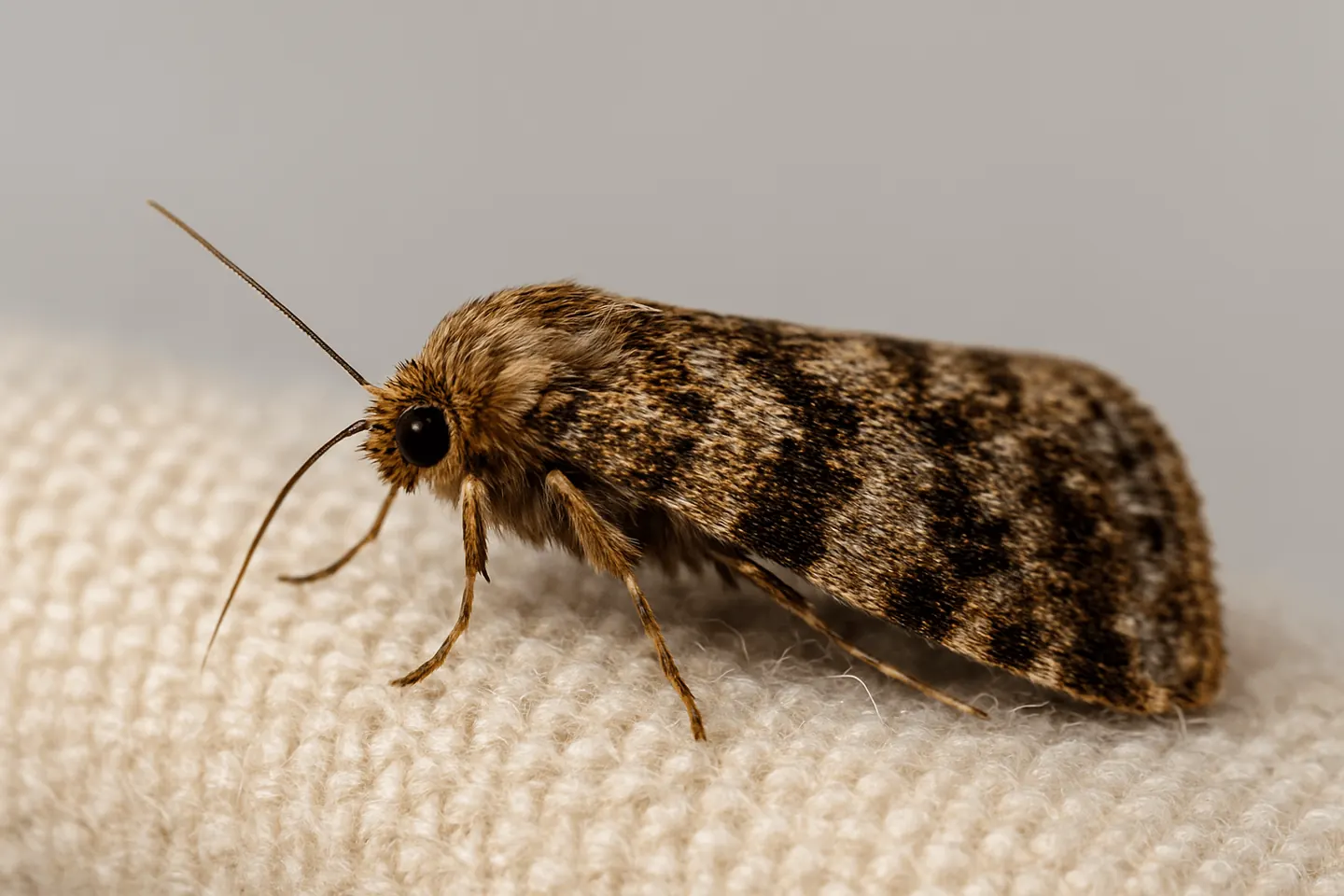
Carpet moth larvae eat wool and other natural fibres in the dark, so by the time you see a bald patch there are eggs, larvae and cases you have not seen. The moths on the skirting do not feed; small cream caterpillars in the pile under furniture and beneath rugs do the damage.
Most people's carpet moth is the case-bearing clothes moth: each larva spins a small silk case, drags it along and colours it with the fibres it eats, so the cases match your carpet. The webbing clothes moth leaves loose silk instead and favours wardrobes. Both eat wool, silk, fur and feathers, including wool-mix carpet.
We find how far the larvae have spread, treat the carpets, edges and voids they hide in, and show you how to keep them out.
They stay under furniture, beneath rugs and along the room edge where a vacuum rarely reaches.
Eggs deep in the pile hatch a week or two after the spray that killed the adults.
Outdoors the life cycle gives one or two generations a year; heated homes allow breeding all year.
Wool and wool-mix carpet, hair and jute underlay and the underside of rugs are all food.
Beetle larvae leave similar bald patches, but the source and treatment differ, so we identify the insect first.
Threadbare wool carpet along the skirting edge, under sofas and beds and beneath rugs.
Rice-grain sized silk cases, usually the colour of the carpet, stuck to the pile or skirting.
Cream larvae up to a centimetre long with a darker head, found under lifted rugs.
Small dull moths that scuttle or flutter low; case-bearing moths are greyish brown with faint spots, webbing clothes moths golden buff.
Fine webbing and sand-like droppings, coloured like the carpet, in the pile and along edges.
Holes in wool rugs, felt underlay, upholstery, stored blankets and clothes in low drawers.
We lift rugs, move furniture, check carpet edges and under beds, and look in drawers and the loft for old wool, felt and birds' nests.
We apply a residual insecticide, usually with an insect growth regulator, to carpets, skirting edges, under furniture and the gaps larvae use. Items that cannot be sprayed are washed or frozen.
We tell you how long to keep off treated carpets and when to vacuum again, and set pheromone traps that show whether moths are still emerging.
Eggs laid before the visit still hatch into the treated pile, so a long-standing infestation may need a second treatment, agreed with you first.
Tell VermiCure what you have noticed and ask about the next step.
