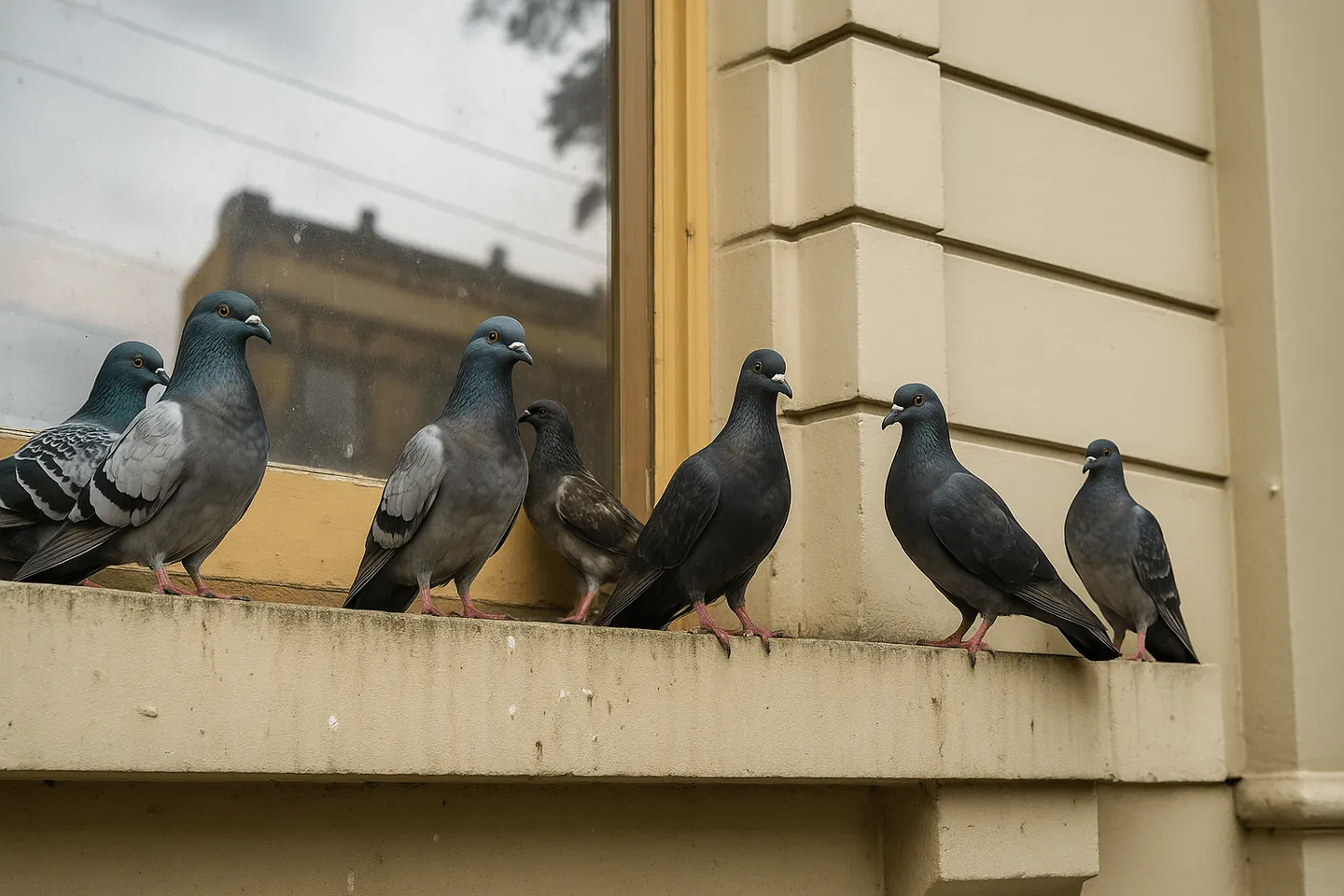
Bird Spikes in Wakefield and West Yorkshire

Practical pest control support for homes and businesses.

Bird Spikes

Pigeons on the ledges, signs or roofline? Bird spike installation and deterrent advice for homes and commercial buildings across Wakefield and West Yorkshire.

We fit bird spikes to ledges, sills, parapets, gutters and signage on homes and commercial buildings across Wakefield and West Yorkshire.

Bird control support from VermiCure
About Bird Spikes

Why spikes are the first choice for ledges

Bird spikes are rows of blunt stainless steel pins on a polycarbonate base that stop pigeons and gulls settling on a surface. They are the usual answer for a ledge, window sill, gutter edge, ridge or sign where birds perch by day and leave droppings beneath.

We measure the surface, choose the spike width and the fixing for the material, clean off any fouling and fit the strips in continuous rows so no comfortable landing gap is left. Spikes do not hurt birds; they take the perch away.

They suit light to medium pressure: birds that visit and roost on a surface. Where birds are nesting in numbers, spikes alone are not the right product and we will say so, and recommend netting or a mix of products instead.

Birds look for flat, open perches

Pigeons and gulls favour wide sills, parapets and gutter edges with a clear view. Spikes take away the flat landing surface without changing the look of the building much.

Scaring devices fade

Decoy owls, tape and ultrasonic boxes lose their effect as birds get used to them. A spike strip does not rely on the bird being frightened, so there is nothing to get used to.

Roosts attract more birds

An established roost draws others in, and droppings build up underneath. Taking the perch away early is simpler than dealing with a colony later.

Two materials, chosen by location

Stainless steel spikes for exposed ledges, long runs and gulls; all-polycarbonate spikes where a softer, non-conductive option is better, for example around aerials or lighting.

Signs spikes are the right fix

Fouling under one spot

White streaks and droppings on the wall, sill, pavement or cars beneath a ledge or sign.

Birds perching, not nesting

Pigeons or gulls roosting along a parapet, sign or gutter edge by day and leaving at night.

Narrow surfaces

Sills, copings, pipes, beams, lamp posts and signage where netting would be impractical.

Blocked guttering

Birds standing in and fouling gutters so leaves and droppings dam the outlet.

Repeated cleaning

Jet washing the same doorway or forecourt every few weeks because the birds come straight back.

What we do on a fitting visit

Step 1

Survey and measure

We check which birds use the surface and how heavily, measure every ledge, sill and edge, note the material we are fixing to and look for anything, such as nests, that changes the plan.

Step 2

Clean the surface

Fouling and debris come off first, with the area damped down and the waste bagged, and the surface is left dry so the fixing holds.

Step 3

Fix the strips

Spikes go on in continuous rows, two or more rows deep on wide ledges, using adhesive, screws or clips depending on whether we are fixing to stone, brick, metal, timber, glass or plastic.

Step 4

Check and tidy

We check that every run is secure and the rows leave no landing gap, clear up, and show you what has been fitted and where.

Before we arrive

  • Clear window sills, balconies and shopfront fascias of plant pots, signs and lights so we can measure and fix without moving your things.
  • Tell us the surface material if you know it: painted timber, stone, uPVC, metal cladding and render each take a different fixing.
  • Let us know about access and parking, and whether we can reach upper sills from inside through opening windows.
  • If you rent, or the building is listed, check with the landlord or the conservation officer that fixings to the facade are allowed.

Keeping ledges clear after the spikes go on

  • Think about neighbouring surfaces: birds pushed off one ledge may try the next, so tell us about every perch you want covered.
  • Remove food sources close to the building: bins, outdoor eating areas and bird feeders.
  • Check the strips after storms, window cleaning or building work and ask us to refit any that have been knocked loose.
  • If pigeons start nesting on top of a spiked ledge, the pressure has gone up; call us about netting or wire as well.

What affects the price of bird spikes and installation

  • The total length of ledge, sill, gutter or sign edge to be covered, and how many rows each surface needs.
  • Stainless steel or polycarbonate spikes, and whether a wider or gull-sized spike is needed.
  • Height and access, including whether ladders are enough or a tower or platform is needed.
  • Cleaning before fitting, and whether other proofing such as netting or mesh is going on at the same time.

Common questions about bird spikes

Where are bird spikes used?
Bird spikes are commonly used on ledges, signs, parapets, rooflines, and other surfaces where birds are roosting or fouling.
Are bird spikes suitable for every bird problem?
No. The right deterrent depends on species, pressure, access, building shape, and legal considerations.
Do bird spikes harm birds?
No. The pins are blunt and spaced so a bird cannot settle between them; a pigeon that tries lifts off and lands elsewhere. Spikes are a passive deterrent, which is why they sit within the law that protects wild birds.
Are pigeon spikes and gull spikes different?
Yes. Gulls are larger and stand taller, so gull spikes are longer and more widely spaced; pigeon spikes are shorter and closer together. The wrong size leaves a gap the bird can use, so we identify the species on the survey first.
Will birds nest on top of anti-roosting spikes?
Where pressure is heavy they can; pigeons have been known to build on top of a spiked ledge. That means the ledge is a nest site rather than a perch, and netting or post and wire is the right product there. We tell you if that is what we see.
Can you fit spikes on a listed or period building?
Often, yes. Clear polycarbonate bases and stainless pins are hard to see, and adhesive fixing avoids drilling into stone. On a listed building you may need consent for anything fixed to the facade, so check with the conservation officer first and we work to what they allow.

Need help with bird spikes?

Tell VermiCure what you have noticed and ask about the next step.