
Walk the site
We look at the burrows, runs, feed stores and buildings, agree where the dogs can work and check that poultry, livestock and pets are shut away.

Practical pest control support for homes and businesses.
Traditional ratting with working terriers for farms, yards, stables and rural sites across Wakefield and West Yorkshire, with proofing advice afterwards.
We use working terriers for rat control on farms, stables, yards and rural properties across Wakefield and West Yorkshire where bait and traps alone are not shifting the rats.
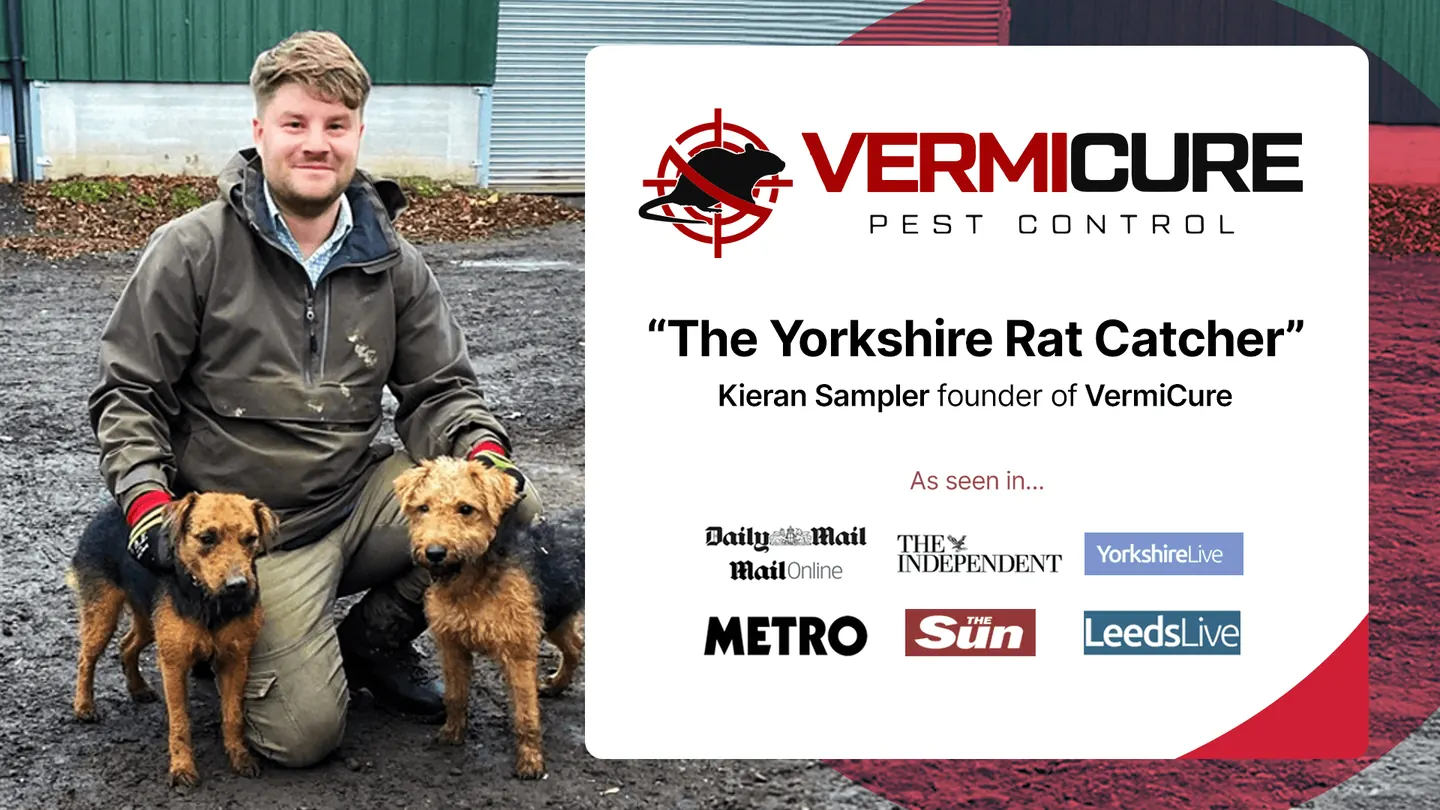
Ratting with terriers is the old way of dealing with rats around farms and yards, and it still earns its place. Where rats live in burrows under feed stores, muck heaps and stables, bait is slow and traps catch one at a time.
At VermiCure we run terrier ratting alongside conventional rat control. We walk the site, work the dogs through the harbourage, then place bait or traps where rats may remain and advise on feed storage and housekeeping. It suits farms, smallholdings, stables, poultry keepers and allotments, and the terrier work itself is chemical-free.
Established rats live in burrows with several entrances under slabs, feed stores and banks. Some never visit a bait station; the dogs go to the burrow.
Rodenticide around livestock, poultry and wildlife must be used sparingly and is often ignored when feed is everywhere. Terriers need no poison.
Working terriers find rats by scent, mark the burrow and catch them as they bolt: instinct refined by training, dogs and handler working together.
Hunting rats with dogs is exempt under the Hunting Act 2004 on land the occupier has given permission to use. We confirm that before we start.
Dogs cut the population hard in a day and you see the count. Survivors still need bait or traps, and the harbourage removing.
Fist-sized holes along walls, under feed bins and in hedge banks, with worn runs between them.
Rats crossing the yard or feeding under poultry feeders in daylight point to a large population.
Stations untouched while the signs get worse, or bait taken with no fall in activity.
Chewed feed sacks, cables and insulation in barns, stables and voids where traps cannot go.
Stacked pallets, timber, long grass and feed spillage giving cover and food near the burrows.
We look at the burrows, runs, feed stores and buildings, agree where the dogs can work and check that poultry, livestock and pets are shut away.
The terriers find the active burrows and we open them up or move the pallets the rats are under. Rats that bolt are taken by the dogs; the rest are dug out.
Rats are counted, bagged and taken away. Where some may remain we place bait in tamper-resistant stations or set traps, away from poultry, livestock and pets.
We show you the harbourage to clear, the feed to store differently and the gaps to close, and agree whether a second day with the dogs is needed.
Tell VermiCure what you have noticed and ask about the next step.
