
Inspect wardrobes and the rooms around them
We check hanging clothes, knitwear, stored bedding, suitcases, the carpet under beds and wardrobes, the airing cupboard and the loft, and identify the species.

Practical pest control support for homes and businesses.
Clothes moth control in Wakefield and West Yorkshire: inspection, treatment and prevention advice for wardrobes, carpets, fabrics and stored items.
We treat clothes moths in wardrobes, drawers and the carpets around them across Wakefield and West Yorkshire, in homes and rented property.
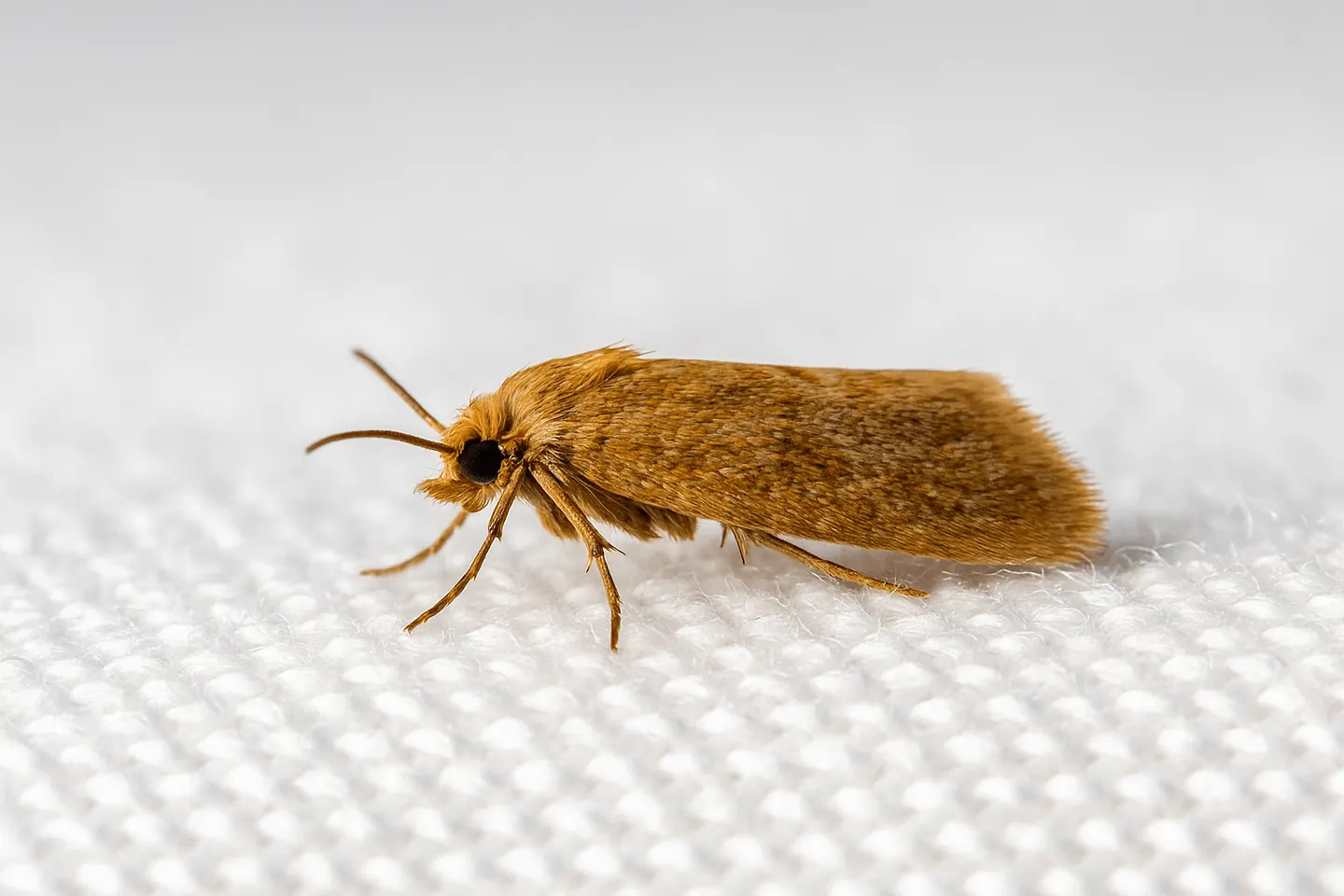
Clothes moth larvae eat wool, silk, cashmere, fur and feathers where you least look: the back of a wardrobe, a drawer of jumpers, a coat left for summer, the carpet under a bed. The moths are harmless; the holes come from pale caterpillars a few millimetres long.
The webbing clothes moth is the wardrobe species; it prefers garments carrying sweat, food or skin, so a worn jumper goes before a clean one. The case-bearing clothes moth, the carpet moth, often shares the house and feeds in carpets too, so we check both and tell you which garments to wash, freeze or dry clean.
Eggs go in seams, folds and pockets, so a wardrobe looks clean while every wool item is affected.
In a heated house clothes moths breed all year; one forgotten bag of winter clothes supplies every room.
Larvae in the bedroom carpet become moths that lay on clothes, so washing clothes alone restarts the cycle.
Cedar and lavender may put adults off laying but do nothing to larvae already feeding.
A hole in cashmere or a grazed wool suit cannot be undone, so early finding matters.
Irregular holes and grazed patches in wool, cashmere, silk and fur, often under collars.
Fine silk threads, tubes or small cases on garments and in drawer corners.
Creamy white caterpillars with a brown head in cuffs, pockets and the carpet beneath hanging clothes.
Golden buff moths that scuttle up the wardrobe wall or flutter out when the door opens.
Fine sand-like droppings the colour of the fabric eaten, in drawers and stored folds.
Bald carpet under the bed or holed blankets in the airing cupboard mean the room is affected.
We check hanging clothes, knitwear, stored bedding, suitcases, the carpet under beds and wardrobes, the airing cupboard and the loft, and identify the species.
Fabrics are not sprayed directly. We tell you which garments to hot wash, tumble dry, dry clean or freeze, and which only need brushing and airing.
We apply a residual insecticide inside emptied wardrobes and drawers, along skirting and under furniture, usually with an insect growth regulator so later hatchlings cannot mature.
Pheromone traps left in the rooms show whether activity continues, and we explain when to put clothes back and when a follow-up makes sense.
Tell VermiCure what you have noticed and ask about the next step.
